
Horticultural LED lamp: What power to choose for my indoor cultivation
Horticultural LED lamp: What power to choose for my culture
Growing plants indoors is a growing passion, and as a BloomLED, the No. 1 manufacturer of LED horticultural lamps in France, we understand how choosing the right lighting is crucial to the success of your indoor garden. The horticultural LED lights we offer offer an energy-efficient and effective solution to stimulate the growth of your plants.
However, with a variety of wattages available on the market, it can be difficult to determine which one best suits your needs. That's why this article was created to guide you through everything you need to know to make the best light output decision.
The Advantages of LED Horticultural Lighting BloomLED : Optimization of Growth and Quality
When you opt for LED horticultural lighting BloomLED, you benefit from a series of exceptional benefits that help improve the growth, quality and efficiency of your indoor garden. Discover how our revolutionary lighting solutions can transform your indoor growing experience:
1) Complete Customization of the Light Spectrum
One of the major advantages of LED horticultural lighting BloomLED lies in their ability to offer 100% light spectrum customization. Unlike human perception of light, plants do not use all wavelengths equally. For example, green light is largely reflected by plants and is not as essential as other colors for photosynthesis. Traditional lighting like HPS often emits a considerable amount of green light, resulting in wasted energy.
Our LED horticultural lighting is designed to emit a light spectrum specifically adapted to the needs of plants. By eliminating unnecessary light, we maximize photosynthesis efficiency while reducing energy consumption, contributing to significant long-term savings.
2) Improvement of Harvest Quality
The use of LED horticultural lighting BloomLED has a direct impact on the quality of your harvest. Thanks to our carefully calibrated design, the active ingredients of your plants are better preserved. For example, terpenes, which contribute to the aroma and taste of plants, are more retained in fruits rather than evaporating into the environment. To learn more about the importance of terpenes, check out our dedicated article on our website bloomled.fr.
3) Improved Environmental Control
Excessive heat generated by traditional lighting can cause problems regulating the temperature in your growing space. However, our LED horticultural lighting BloomLED emit very little heat, eliminating the need to invest in expensive cooling systems to maintain optimal conditions. This allows you to better control your growing environment, promoting healthy and stable growth.
4) Simplicity and Security
The indoor growing experience should be enjoyable and safe, and that's exactly what our LED grow lights deliver. Our products are designed to be simple and ready to use. Most of our solutions are delivered turnkey, you just need to plug them into an outlet to make them work. We've focused on ease of use and safety to allow you to focus on what really matters: growing your plants.
Light power: Beyond watts
Light output, measured in watts (W), indicates the energy consumption of the lamp. However, for plant growth, light intensity (measured in micromoles per second, μmol/s) is more important. Understanding the difference between these measurements is crucial to choosing the appropriate lamp.
Understanding Watts: Energy Consumption
When you look at the specifications of a horticultural light, the light wattage is one of the first characteristics you will come across. Watts measure the energy consumption of the lamp, that is, the amount of electricity it uses to operate. However, it is important to note that wattage does not directly provide information about the amount of light produced or the quality of that light for plants.
Lumens: Measurement of Brightness Perceived by the Human Eye
Lumens (lm) are a unit of measurement of brightness perceived by the human eye. It is a commonly used measurement to evaluate lighting in contexts where the impact on human vision is significant. However, when it comes to plant growth, lumens are less relevant because plants don't perceive light the same way we do. A lamp with a high number of lumens may seem very bright to us, but this does not guarantee that it will provide enough light to promote plant growth.
Micromoles per Second (μmol/s): Measuring Light Intensity for Plants
For plants, what really matters is the amount of light photons available for photosynthesis. This is where micromoles per second (μmol/s) comes in. This measurement quantifies the number of light photons emitted by the lamp each second, which is essential for plant growth processes. In other words, μmol/s represents the “strength” of lighting for plants.
How much cultivation area should be illuminated ?
First of all, assess the size of your growing space. The general rule is to have between 200 and 400 μmol/s per square meter for growth and flowering. The lamp should cover the entire growing area evenly to avoid shadow areas. At the house of BloomLED, we always indicate a growing area for our LED horticultural lamps.
This allows you to choose the best lamp without error.
Meet the specific needs of your plants
Each plant has distinct light needs. For example, fast growing plants need higher intensity than late flowering plants. Learn about the needs of your plants at each stage of their life cycle to choose the right potency.
If you are looking for an LED horticultural lamp just for growth, you can turn to the SpectraBUD, and more precisely to the SpectraBUD M200 which has a spectrum dedicated to growth.
If you want to light seedlings, cuttings, then in this case, choose a lamp SpectraLINE, suitable for this use.
For intensive cultivation in a growth chamber or greenhouse:
- You can equip yourself with a light bulb SpectraBULB X20 Or SpectraBULB X30 for areas up to 60cm x 60cm
- Between 60cm x 60cm and 80cm x 80cm you can choose one SpectraPANEL X100 Or SpectraPANEL X200
- For an area of 80cm x 80cm up to... you can equip yourself with a SpectraWILD, ultra-efficient multi-bar lighting.
Need information? Contact our team by email or by phone at 03.83.47.83.98
The role of the light spectrum
In addition to power, the light spectrum is crucial. Choose a lamp that offers a spectrum suitable for all phases of growth. Our modern horticultural LED lights offer a full spectrum, providing the wavelengths needed for photosynthesis.
Ensure even light distribution
Even light distribution is essential for even growth. If you grow on large areas, the SpectraWILDs are perfect because they are large systems which allow you to obtain very homogeneous lighting under your plants.
Conclusion: Light up your crop with the right power
Choosing the right light output is a crucial step in optimizing the growth of your indoor plants. By understanding your plants, assessing your specific needs, and considering the technical aspects of horticultural LED lights, you can create an optimal growing environment. Opt for the potency that best suits your crop, for healthy growth, abundant flowering and bumper harvests. Use these tips to make an informed decision and enjoy a thriving and fulfilling indoor garden.
FAQ: Answers to your questions about the light output of horticultural lamps
Q: What is the difference between light output and light intensity ?
Light output is measured in watts and indicates the energy consumption of the lamp. Light intensity, measured in micromoles per second (μmol/s), is most important to plants because it reflects the amount of light available for photosynthesis.
Q: How do I know how many μmol/s per square meter my crop needs ?
For growth and flowering, aim for between 200 and 400 μmol/s per square meter. Refer to the specific needs of your plants to adjust this value.
Q: Can I use a more powerful light for a small grow ?
Yes, but be sure to adjust the intensity correctly to avoid excessive light exposure. Some lamps allow you to adjust the power to adapt to the size of the crop. For example, many of our customers take a SpectraWILD M650 or SpectraWILD L900 PRO for an area of 120cm x 120cm but do not use the lights 100% throughout the grow.
Q: Should I adjust the power based on temperature ?
Yes, high temperatures may require slightly higher power to compensate for the energy dissipated as heat. On SpectraWILDs, the SmartWild management console allows you to do this automatically.
Q: How do I know if my lamp is compatible with an extension of my culture ?
Choose a slightly more powerful lamp to anticipate the expansion of your growing space. Also check if the light has adjustment options to accommodate different crop sizes.
Q: What are the advantages of a waterproof lamp ?
A waterproof lamp, like the SpectraWILD S320, provides protection against humidity, which extends lamp life and ensures consistent performance in humid environments.
Q: Are LED horticultural lights with dimmer recommended ?
Dimmer lights offer precise control over light intensity, which can be beneficial for different growing stages. However, make sure you understand how to use the dimmer properly to avoid underexposure or overexposure issues.
Lighting with intensity management: SpectraPANEL + SpectraWILD range
Bonus Tips: Optimize Your Horticultural Lighting
- Use timers to maintain a consistent light cycle and avoid disruption to your plants.
- Monitor your plants carefully for signs of light stress, such as scorched leaves.
- Place the lamps at the correct height to ensure even coverage without creating shadows.
In short, choosing the ideal light output for your indoor grow requires a thorough understanding of your plants, their life cycle and the specifications of horticultural LED lights available on the market. By following these tips, you will be able to create an optimal growing environment that will promote the health, vigor and productivity of your plants. Make your indoor garden a thriving growing oasis by selecting the perfect light output for every step of your plants' journey.
Related products
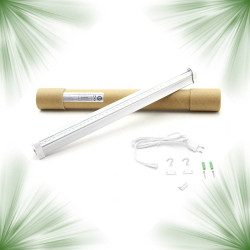
SpectraLINE 30cm Horticultural LED Bar - 7W
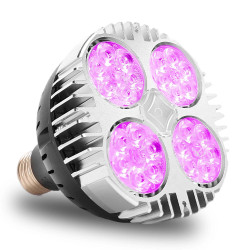
SpectraBULB X30 V2 — 35W Full Spectrum LED Grow Bulb, E27 Socket
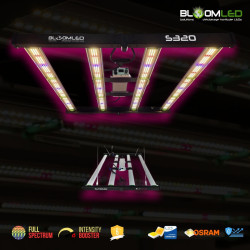
SpectraWILD S320 - Full Spectrum LED Grow Light Bars 320W Samsung - 80x80 Tent

LED Horticultural Lamp 100W - 60x60 - SpectraPANEL X100
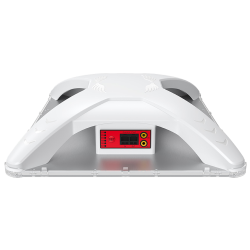
SpectraPANEL X200 200W LED Grow Light - Full Spectrum for 100x100 Tents | BloomLED
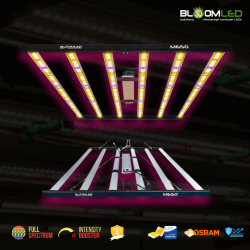
SpectraWILD M650 - Full Spectrum LED Grow Bars - 650W - 120x120 - Samsung

SpectraWILD L900 PRO - Full Spectrum LED horticultural bars - 900W - 150x150 - Samsung
Related posts
 Zoom on the SpectraMODULE X135 LED horticultural lamp
Discovery of future SpectraWILD LED horticultural lighting
Moving plants from the growth to flowering phase in indoor cultivation
How to grow seeds indoors under LED horticultural lamps
A new method of fixing for SpectraLINE LED horticultural systems
Zoom on the SpectraMODULE X135 LED horticultural lamp
Discovery of future SpectraWILD LED horticultural lighting
Moving plants from the growth to flowering phase in indoor cultivation
How to grow seeds indoors under LED horticultural lamps
A new method of fixing for SpectraLINE LED horticultural systems