
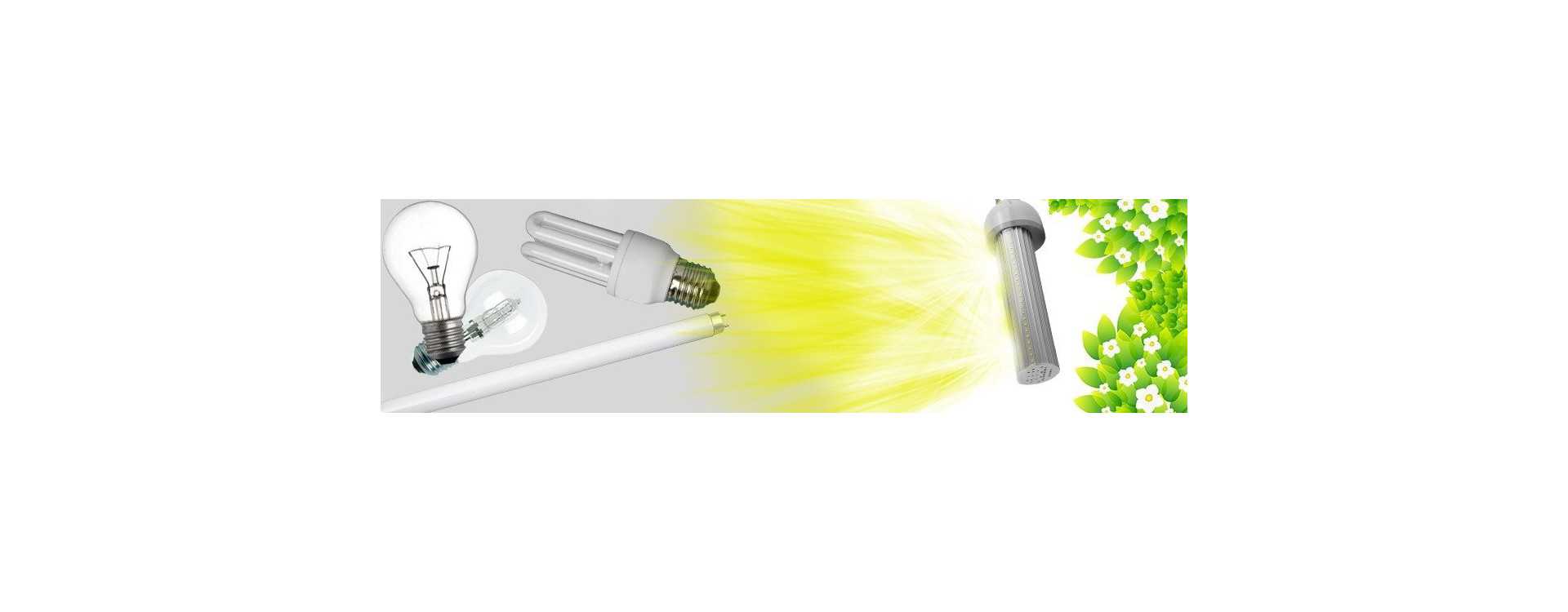
Low consumption horticultural lamp to control costs.
Low consumption horticultural lamp to control costs.
Sunlight is a vital factor in the growth and development of a houseplant.
Today, we can better understand the relationship between light and our plants and how plants manage to absorb and use this energy.
Thanks to these studies and our technological evolution, we have managed to develop horticultural lamps capable of imitating sunlight in order to illuminate our plants without any light constraints and thus promote the growth and flowering of our crops. indoor.
The different types of lighting and their consumption
Any horticulturist, amateur or experienced, carefully selects the type of lighting they will use for their indoor growing.
It is this choice which will determine the evolution of its production, but also its yield. And to meet this need for light, there are many options on the horticultural lighting market, some powerful, others economical, sometimes both? This is what we will see in this overview of lighting systems for our indoor plants.
The incandescent light bulb
Already disappeared from commerce, we are taking this extreme to point out how this type of lighting can be counterproductive. The performance of this technology is exceeded with its 5 to 20 lumens per Watt. What's more, this type of light releases significant heat for very little luminosity.
The halogen incandescent bulb
Here it is bromine or iodine gas which is used in a glass bubble to produce luminosity. These systems were created to withstand even more heat than conventional incandescent bulbs, so this model releases even more heat by producing between 15 to 30 lumens per Watt, still a low efficiency.
The Neon Tube
They could be mistaken for horticultural lighting solutions, wrongly. With a reddish tint, the neon tube spectrum is not suitable for indoor grows, producing between 30 and 50 lumens per Watt.
The fluorescent tube
This lighting system was widely used in the aquarium industry and indoor growing. With an emission of 80 to 110 lumens per Watt, this tube has the advantage of releasing very little heat. However, the lifespan of this type of lighting is very short and also difficult to recycle and toxic, this product was quickly discarded.
The compact fluorescent lamp
Also equipped with a fluorescent tube, significant heat is released from these systems via the ballast installed in the base of the device. Consequently, this makes it mandatory to purchase additional equipment to extract heat, for an output of 70 to 100 lumens per Watt.
The sodium vapor lamp (HPS)
Gas system using sodium, current generations deliver 80 to 120 lumens per Watt. It exists in low and high pressure changing the color of the light emitted. This type of light is preferable for flowering cycles because its light spectrum offers a red tint.
The plasma spot
Long-life, these systems produce between 100 and 140 lumens per Watt while producing the entire visible spectrum frequencies. Environmentally friendly, these plasma systems never lose power throughout use.
The LED alternative
In this multitude of lighting techniques, LEDs or light-emitting diodes are developing.
This technology proves to be capable of adapting and recreating any color of the visible light spectrum, while offering the most favorable performance with 50 to 150 lumens produced per Watts.
LED installations offer several advantages adapting to all types of indoor crops and meeting the needs of horticulturists. This technology therefore offers a low temperature and very space-saving light spectrum, but the most interesting thing lies in the savings that the LED provides, both in its total energy cost and in its lifespan.
In fact, LEDs convert very little electricity into heat, which considerably reduces energy waste, and it promises constant quality throughout its 50,000 hours of life, an investment worth thinking about when you want to start in horticulture.
For more information, discover our article on horticultural and growth lamps .
For more information, discover our article on horticultural and flowering lamps .
Related posts
 Zoom on the SpectraMODULE X135 LED horticultural lamp
Discovery of future SpectraWILD LED horticultural lighting
Moving plants from the growth to flowering phase in indoor cultivation
How to grow seeds indoors under LED horticultural lamps
A new method of fixing for SpectraLINE LED horticultural systems
Zoom on the SpectraMODULE X135 LED horticultural lamp
Discovery of future SpectraWILD LED horticultural lighting
Moving plants from the growth to flowering phase in indoor cultivation
How to grow seeds indoors under LED horticultural lamps
A new method of fixing for SpectraLINE LED horticultural systems